The Intelligent IBP Manifesto – 50 principles for a new planning paradigm

The IBP paradigm has hardly changed for 30 years, the decision needle has not moved enough. We’ve entered an AI era where 74% of work can be augmented or automated and 26% eliminated. Planning will not be excluded from this evolution. However, only 3% of companies apply automated execution and 7% autonomous end to end planning. 2% of managers apply best practice decision methods. Hardly … Continue reading The Intelligent IBP Manifesto – 50 principles for a new planning paradigm


The Future of xP&A and Supply Chain Planning – Part 2

Extended Planning & Analysis, xP&A, is the evolution of financial planning beyond the finance function. It requires planning highly integrated with other business functions, a transformation of analytics, and a business partner culture, which combined lead to the requirement for modern FP&A skills in the workforce. In two articles, based on the webinar “XP&A in action: Enhancing FP&A Agility with Supply Chain Planning”, I will discuss the future of xP&A and supply chain planning. This second article will … Continue reading The Future of xP&A and Supply Chain Planning – Part 2

The Future of xP&A and Supply Chain Planning – Part 1

Extended Planning & Analysis (xP&A), is the evolution of financial planning beyond the finance function. It requires planning that is highly integrated with other business functions, a transformation of analytics, and a business partner culture, which combined lead to the requirement for modern FP&A skills in the workforce. In two articles, based on the webinar “XP&A in action: Enhancing FP&A Agility with Supply Chain Planning”, I will discuss the future of xP&A and supply chain planning. This first article focuses on … Continue reading The Future of xP&A and Supply Chain Planning – Part 1

Planners Deserve a Better Vision!

We’ve entered an AI era where 76% of work can be augmented or automated. However, only 3% of companies apply automated execution and 7% autonomous end to end planning. 2% of managers apply best practice decision methods. Hardly a recipe for improving planning & decision making. Imagine the opportunity if we closed this massive planning, decision & execution gap with a new planning paradigm. Supported … Continue reading Planners Deserve a Better Vision!

The Automation of Routine Collaborative Decisions in S&OE

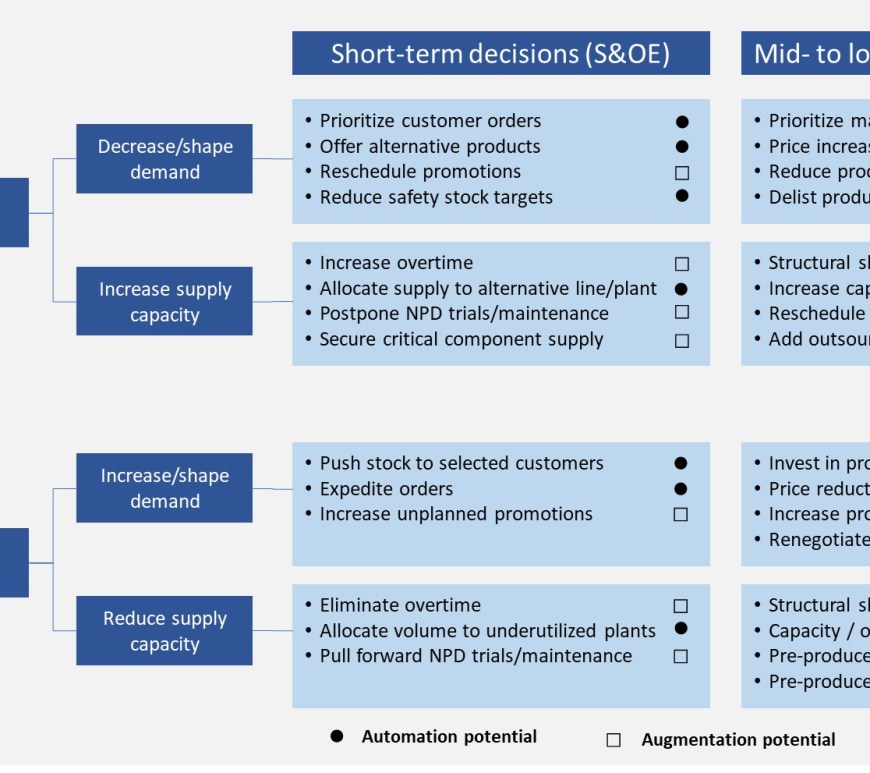
The Sales & Operations Execution (S&OE) cycle is a much-needed addition to your S&OP/IBP process. I used to implement it as ‘The Control Cycle’. Gartner came up with S&OE and Oliver Wight now calls it ITP (Integrated Tactical Planning). Whatever you call it, you better have it as a business if you want to react to short term disruptions Where your IBP process focuses on … Continue reading The Automation of Routine Collaborative Decisions in S&OE

Why Data Sharing is Limited in a Competitive Environment

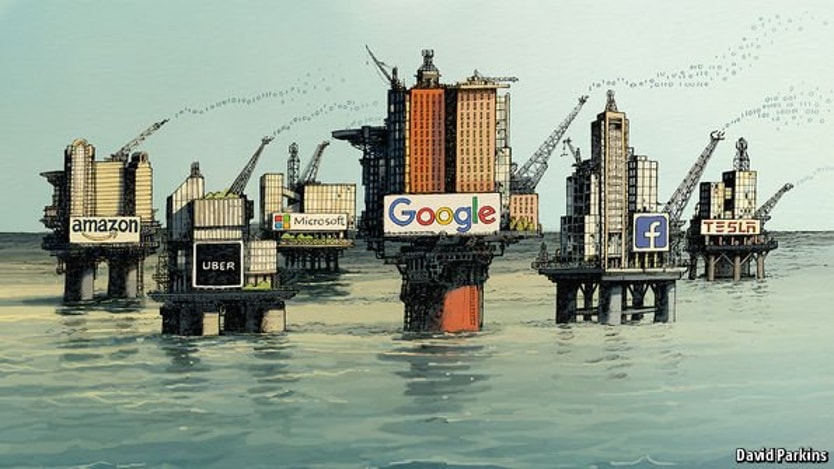
This is a commentary on the article To Share or Not to Share: The Future of Collaborative Forecasting, Foresight 2022, Q4, by Pierre Pinson, Editor in Chief of The International Journal of Forecasting. Asymmetry of Data Ownership In Pierre Pinson’s article “To Share or Not to Share: The Future of Collaborative Forecasting,” the comparison between data and big oil is striking. Just like oil, data … Continue reading Why Data Sharing is Limited in a Competitive Environment

Intelligent IBP – a new role for supply chain planners

Preview – Most IBP cycles around the world are based on a 20-year-old process definition supported by 20-year-old planning concepts. This traditional IBP is not set up for a fast-changing world, where speed of decision making confers a competitive advantage. Intelligent automation will change this. In this series of blogs, I will discuss the transition of traditional IBP towards a more intelligent IBP. Here, you … Continue reading Intelligent IBP – a new role for supply chain planners

Intelligent IBP – Closing the Decision Gaps

Preview – Most IBP cycles around the world are based on a 20-year-old process definition supported by 20-year-old planning concepts. This traditional IBP is not set up for a fast-changing world, where speed of decision making confers a competitive advantage. Intelligent automation will change this. In this series of short blogs, I will discuss the transition of traditional IBP towards a more intelligent IBP.  In … Continue reading Intelligent IBP – Closing the Decision Gaps

Intelligent IBP – Unshackle the Planners!

Preview – Most IBP cycles around the world are based on a 20-year-old process definition supported by 20-year-old planning concepts. This traditional IBP is not set up for a fast-changing world, where speed of decision making confers a competitive advantage. Intelligent automation will change this. In this series of short blogs, I will discuss the transition of traditional IBP towards a more intelligent IBP. You … Continue reading Intelligent IBP – Unshackle the Planners!

Intelligent IBP – The Rise of Autonomous

Preview – Most IBP cycles around the world are based on a 20-year-old process definition supported by 20-year-old planning concepts. This traditional IBP is not set up for a fast-changing world, where speed of decision making confers a competitive advantage. Intelligent automation will change this. In a series of short blogs, I will discuss the transition of traditional IBP towards a more intelligent IBP.  In … Continue reading Intelligent IBP – The Rise of Autonomous